Tres Mares is a new name for something that has been running for more than ten years. When Carlos Vargas tells the story, he starts before any of it was a business, at a time when Airbnb itself was still new, especially in Costa Rica.
A guest first
Carlos first stayed in an Airbnb in 2014, for the World Cup in Brazil. About a year later, in 2015, he traveled to Medellín and stayed in a room in the host’s own apartment. Back then that was the usual way to use the platform: a private room in the home where the host lived, and a host you actually met in person.
One night they had beers on the balcony, and the host showed him Airbnb from the other side, the host’s side. Carlos remembers exactly what he thought: this was “un negocio puesto en una bandeja de plata”, a business handed to him on a silver platter. He came back to Costa Rica with the idea of building something of his own as a host.
One spare room
At the time he lived in a two-bedroom apartment, his first bachelor place, which he shared with his cousin. A couple of months after the Medellín trip, the cousin left for INCAE to study a master’s in business administration, a program that meant living there. That left a bedroom empty, and Carlos put it on Airbnb.
He was working as an operations manager at Western Union, and he was curious about the sharing economy as a whole. Uber was also just starting in Costa Rica, and Carlos sat in the front row of the second Uber training held in the country. He left the office at 6 p.m. and drove until 9 or 10 at night, every day, to learn how the business worked. Later he bought a couple of cars so other drivers could use them for Uber, a small fleet that earned something on top of his eight-to-five job.
The early days
Meanwhile, the spare room was getting its first guests.
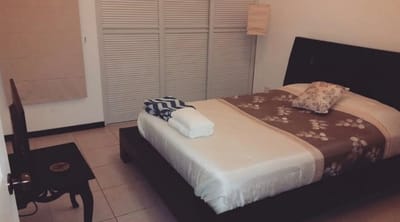 The first bed Carlos ever made up for an Airbnb guest.
“My first ever Airbnb bed done,” he wrote under that photo years later. He also thought he would take a picture with every guest he ever had, and he started doing it with the first ones who arrived.
There was no lockbox, let alone anything smarter. “I had no lockbox back then much less a smartlock!” The instructions to guests were to find the keys under the door mat, or hanging from the garden bush in front of the flower pot.
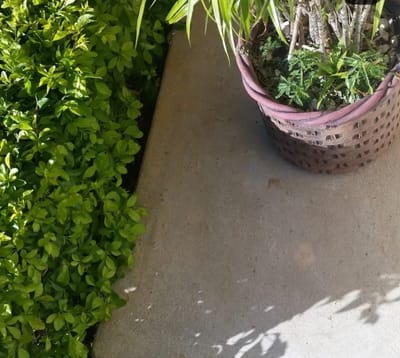 The garden bush and the flower pot where the keys waited for guests.
Seventeen coins
One photo from those years means more to him than the rest. On a glass plate from Murano, in Italy, he left 17 euro coins, “just as a test in humanity”. He was a bachelor with nothing to lose but material things, he says, and would not have minded if a coin, or anything else in the apartment, went missing. Each time a guest checked out, he counted the coins.
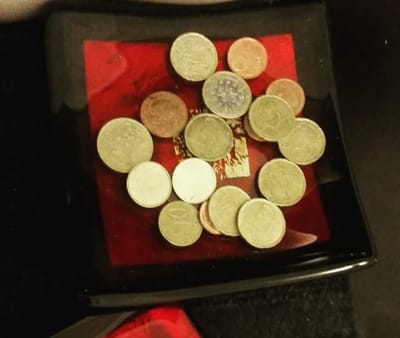 The Murano glass plate with its 17 euro coins.
Not a single coin ever went missing. Once, a guest even left a 20 US dollar bill on top of the coins as a tip. For Carlos, that plate stands for the trust in the platform that everything else grew from. That first room is where he learned to trust Airbnb and its guests, and where he started to understand what guests need and what they want.
Sharon, and a whole house
Then, as he puts it, “Sha came into my life.” Sharon Barrantes, now his wife, is part of all of this too. Carlos had a second house in the same condominium, rented out long term. When those tenants finished their contract and moved to a house they were building, Carlos and Sharon moved into it, because it was bigger. The home where it had all started with one private room went on Airbnb as an entire home.
Among his old photos are Sharon and Carlos out car shopping, for what later became a key part of their car rental business.
From host to property manager
The whole home did very well. A cousin who lived right behind it moved to Spain, and asked Carlos to put his furnished house in the business too. That was his first job as a property manager, around 2016 or 2017. Then neighbors heard it was going well and asked him to help with their homes as well.
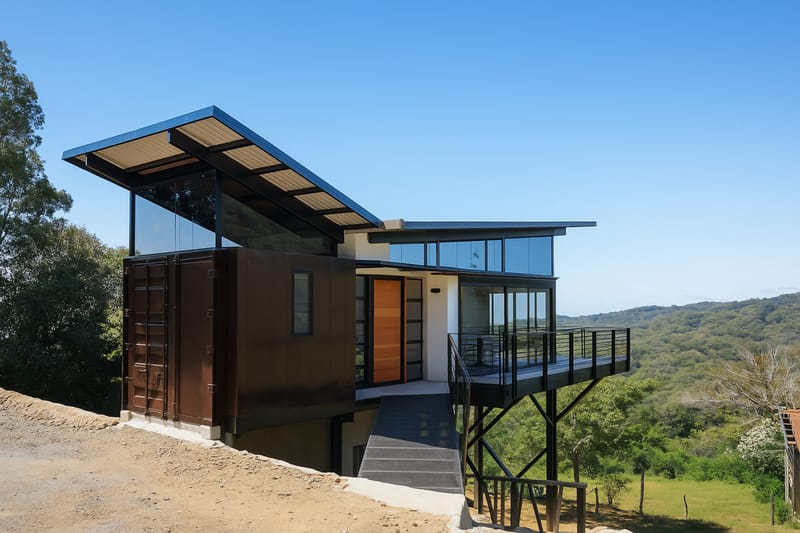
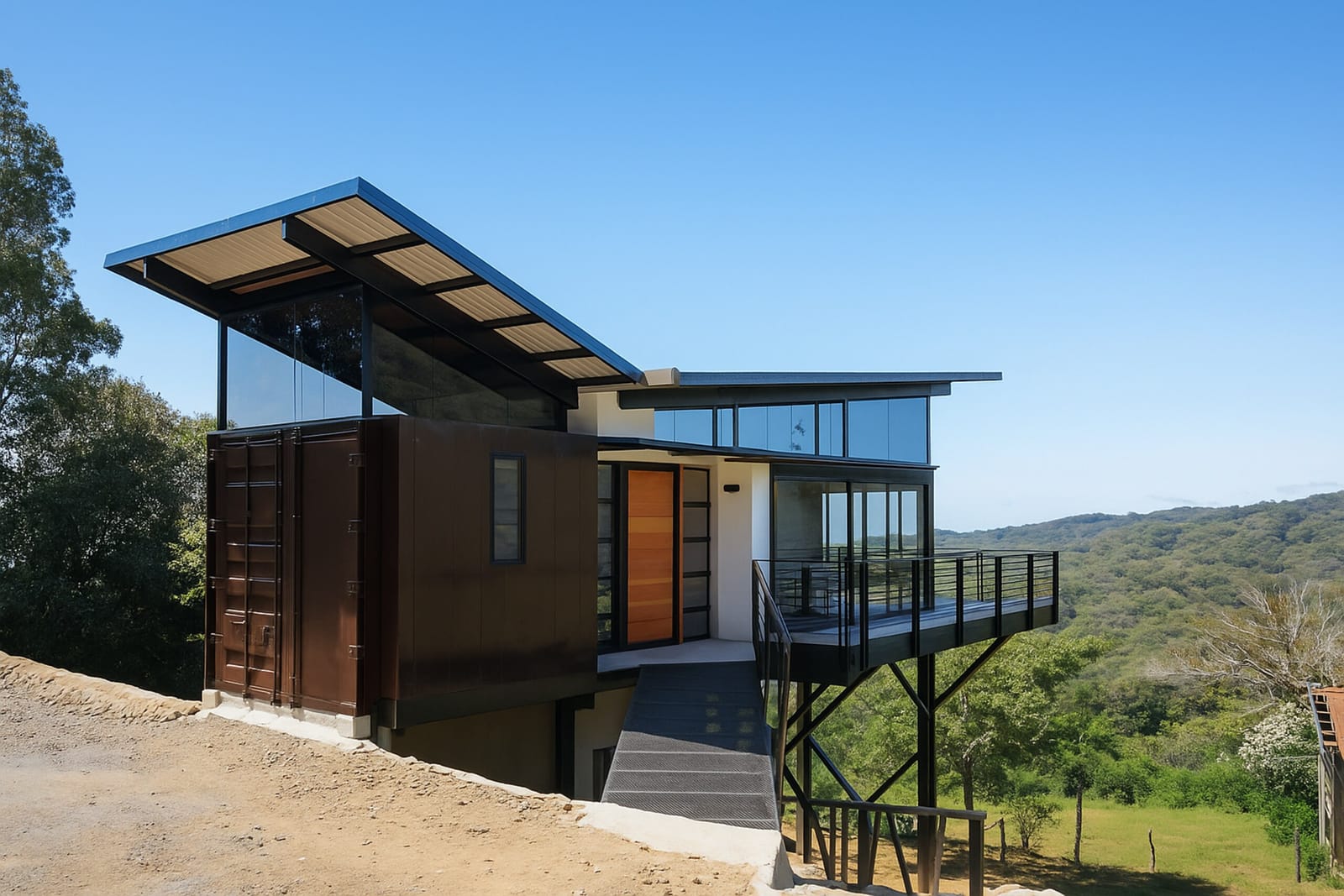
Later, that cousin came back from Spain with a project in mind. He bought a lot in Monteverde, hired an architect and built Kapetsowa Container Loft, less than a kilometer’s walk from the main biological reserve. Its design catches the eye of everyone walking up to the reserve, and it has become something of an icon in Monteverde. It has had more than 700 bookings so far, and Carlos calls it the crown jewel. It was also their first home run from a distance.
Small on purpose
From there the operation grew little by little, on good work done with attention to detail, with care, and with a very personal touch. At one point before the pandemic there were 25 properties. They have not wanted to grow past that, Carlos says, because beyond it the work turns too commercial. The idea has always been to manage only as many homes as they can look after personally, and that is part of who they are.
More than ten years after that spare room, the business finally has a name, Tres Mares, and Carlos and Sharon still run it that way. There is more about the two of them on our About page.
Questions this guide answers
When did Tres Mares start?
With one spare room in Carlos Vargas's apartment, a couple of months after a 2015 trip to Medellín where a host showed him how Airbnb works from the host's side. The business has been running for more than ten years. The name Tres Mares is new.
How did Kapetsowa Container Loft come about?
Carlos's cousin came back from Spain with a project in mind, bought a lot in Monteverde, hired an architect and built the container loft, less than a kilometer's walk from the main biological reserve. It has had more than 700 bookings.
How big has Tres Mares grown?
At one point before the pandemic there were 25 properties. Tres Mares has chosen not to grow past that, so every home can be looked after personally.