Use a credit card for most things, carry a few US bills of $20 or smaller, and take colones from a bank ATM for sodas (small local diners), buses and tips. Dollars are widely accepted, but change comes back in colones, and restaurant bills already carry a 10% service charge set by law. Figures are as of November 2026.
Should you carry colones or dollars?
Both, in small amounts, with a card doing most of the work. The colón is the currency, and the Costa Rican Tourism Board (ICT) says US dollars and major credit cards are widely accepted. Costa Rica Vibes adds the catch: change usually comes back in colones, shops often give a worse rate on dollars, and ripped or large bills often get turned down. Bring dollars in $20 bills or smaller and in decent condition; Tico Travel (October 2026) lists bringing only $100 bills as a common mistake.
Pay in the currency the price is written in, and keep colones for the places that run on them: sodas, farmers markets, parking attendants and tips, per Tico Travel. Our guides for travelers from the US, from Canada and from Europe cover the rest of a first trip.
What is the exchange rate in November 2026?
About 448 colones to the dollar. On 16 November 2026 the Central Bank (BCCR) reference rate was 442.56 colones to buy a dollar and 448.34 to sell one, as published by tipodecambio.paginasweb.cr. At that rate a 10,000-colón note is about $22.30, and a $20 bill is worth roughly 8,850 colones at the buy rate.
To change cash, the ICT says to use only banks and approved exchange offices, and to bring your original passport, not a copy. Costa Rica Vibes says the exchange counter in baggage claim has poor rates, so change about $50 there only if you need cash right away; bank lines in town can take an hour or more, it adds.
Do cards and contactless payments work?
Yes, in most places a visitor goes. Tico Travel says cards, including contactless payments, work at most hotels, supermarkets, tour operators and sit-down restaurants. Costa Rica Vibes says small restaurants may be cash only, some shops set a card minimum of about $5, and national parks are now cashless, so park entry is paid by card.
Two habits save money. If a card machine offers to charge you in US dollars, decline and pay in colones: Tico Travel says the machine’s conversion rate is usually worse than your bank’s. And use a card with no foreign transaction fee; Costa Rica Vibes suggests carrying two cards from different accounts in case one fails.
Which ATMs should you use, and what do they cost?
A bank ATM, ideally Banco de Costa Rica (BCR) or Banco Nacional. ATM Fee Saver (February 2026) says two of the largest banks charge foreign cards no ATM fee and names BCR and Banco Nacional as its picks, while other banks charge US$4 to US$9 per withdrawal. Tico Travel puts BAC’s fee at $7.80 per withdrawal on foreign cards as of September 2026, and your own bank may add its fee on top.
ATM Fee Saver lists withdrawal limits of 100,000 to 500,000 colones per transaction depending on the machine, says machines take 4-digit PINs, and advises choosing “without conversion” or “charge in CRC” when the screen offers a conversion. Machines give colones; on dollars the sources differ, with Costa Rica Vibes saying many let you choose and ATM Fee Saver saying only some ATMs at a handful of banks do. The ICT notes that some ATMs close from 23:00 to 05:00, so withdraw during the day.
How do you pay the tolls?
In colones in small bills at the manual lane, or in dollars with change in colones. Ruta 27 by Globalvia’s table from October 2026 charges a car 380 colones at Escazú, 570 at San Rafael, 750 at Atenas and 570 at Pozón: 2,270 colones each way through the four main booths, about $5, and ramp booths add 190 to 440. Two Weeks in Costa Rica (October 2025) says the manual lane takes colones or small US bills and the attendant gives change in colones, and Costa Rica Vibes suggests a $10 bill at the first booth and the change for the rest.
Cards are where sources differ. Two Weeks describes a lane marked “tarjeta” where you can tap a credit card, once that card is already working for other purchases in Costa Rica; Costa Rica Vibes lists some tolls as cash only. Rental cars usually do not carry the Quick Pass transponder, per Two Weeks, so avoid that lane. Insurance, gas and the rest of the road costs are in our guide to renting a car in Costa Rica.
How do you pay for buses, taxis and Uber?
Buses take colones in cash, per Costa Rica Vibes, although the San José area is changing: The Tico Times reported in March 2026 that about 2,000 fare validators work on routes of 60 bus companies in the metropolitan area, for a new prepaid transit card, and in June 2026 that the electronic system handled 35.4 million bus and train fares in 2025. Tico Travel mentions tapping a Visa or Mastercard on transit, but which routes take a foreign card is not confirmed. Carry coins and small notes either way.
Red taxis must run the meter, called the “maría”, on every ride, per Route Pura Vida (May 2026). Since 27 October 2026 the regulated fare for a red sedan taxi is 870 colones for the first kilometer and 870 for each additional one, per CRHoy, about $1.94 each. Orange taxis hold the airport concession, with a kiosk outside arrivals; Route Pura Vida describes them as metered or fixed-rate, so confirm the fare before you get in. Uber takes card or cash, and Route Pura Vida puts a ride from SJO to Escazú at 6,000 to 10,000 colones, about $13 to $22 at the November rate.
Can visitors use SINPE Móvil?
In most cases, no. SINPE Móvil links a phone number to a bank account, and it is how many Costa Ricans pay each other: The Tico Times reported 747.5 million transfers in 2025 and 4.5 million active phone numbers by the end of the year. BAC’s page says the linked account must be in colones and that transfers are free up to 100,000 colones a day. Tico Travel (October 2026) says tourists generally cannot use it, because banks generally ask for a Costa Rican cédula or a DIMEX residency card and the number must be a Costa Rican mobile line.
So when a small business asks “¿SINPE?”, answer with colones in cash or a card.
Is the 10% on a restaurant bill a tip, and is it required?
Yes, and it is already on the bill when you are served at a table. Ley 4946 of 1972 gives restaurant and bar workers a right to a tip when they serve at the table, and Ley 9116, approved in 2012, sets it as a mandatory 10% charge for that service, calculated on what you ordered before the 13% VAT, per Delfino (September 2025 and October 2026). The money goes to the waiters, on top of their wages. With the 13% VAT the ICT describes, a dish listed at 10,000 colones before charges comes to 12,300: 1,300 of VAT and 1,000 of service.
Consumer law (Ley 7472) requires menus to show the final price with taxes and charges. In September 2026 the Ministry of Economy (MEIC) inspected 70 restaurants and found 36 menus without the final price, 33 of them leaving out the 10%, per Delfino, so read the bill before you pay. The charge is for table service only: MEIC’s minister said, per El Observador in February 2026, that charging it on takeout is illegal. Anything more is your choice; the ICT says an extra gratuity is welcome when you are exceptionally happy, and Costa Rica Vibes suggests 5% to 10% for excellent service.
Whom else should you tip, and how much?
Guides, drivers and housekeeping, because the 10% covers table service only. Costa Rica Vibes shares its own habits: about 10% per person for tour guides, more for private or specialized tours; 10% to the driver of a private shuttle and a few dollars on a free hotel shuttle; about 10% or a rounded-up fare for taxis; $1 to $2 per bag for bellhops; 500 to 1,000 colones to a parking attendant when you leave; and $1 or $2 a night in an envelope for housekeeping. Both currencies work for tips, it says, and locals usually prefer colones.
At Ewa Boxes housekeeping is available at extra cost, and at Casa Azul cleaning during a longer stay can be arranged.
Where to stay: our homes
- Casa Yaiwa, Santa Elena, Monteverde, for up to six, with restaurants, supermarkets and banks within walking distance. From $107 a night.
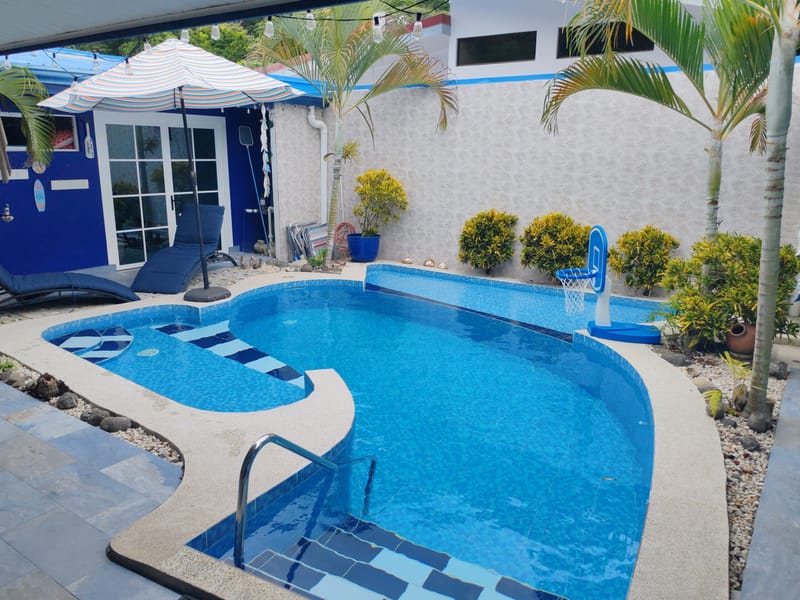
- Casa Azul, Punta Leona, for up to eight around a private pool, 75 meters from the Arenas supermarket and about 1.5 hours from SJO without traffic, closer to 2 with it. From $287 a night.
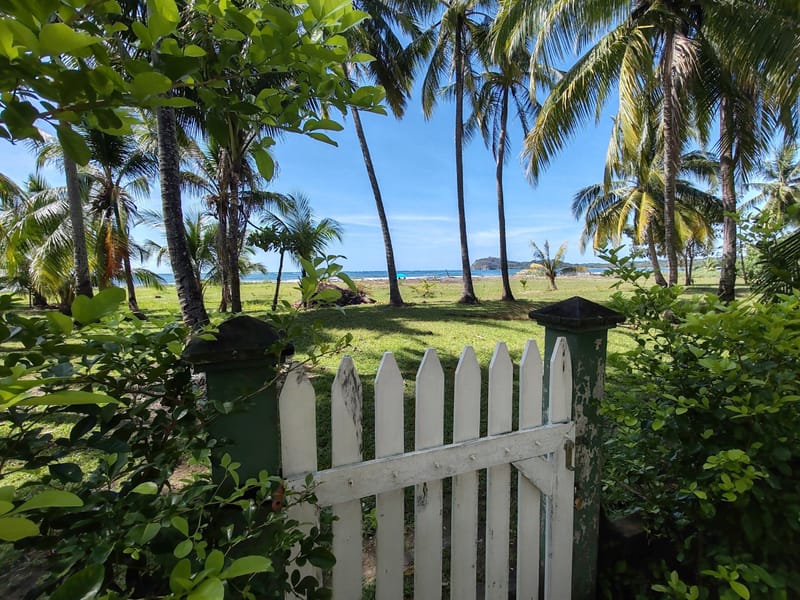
- Casa Almendros, Sámara, beachfront for up to six, with local restaurants within walking distance. From $303 a night.
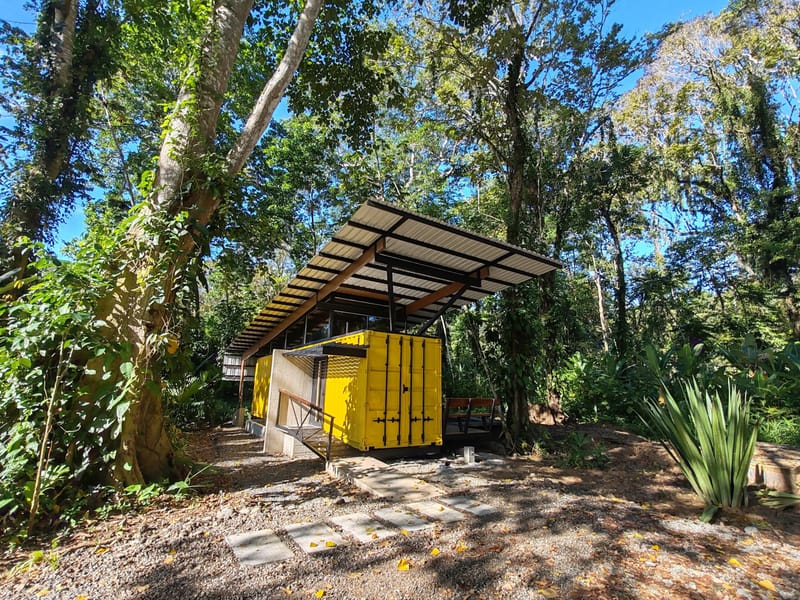
- Ewa Boxes, Cahuita, for up to eight, with supermarkets 10 to 15 minutes by car, per guests. From $361 a night.
- Alta Pietra, Escazú, for up to four, with a pharmacy and convenience store three minutes on foot. From $150 a night.
Message us on WhatsApp with your arrival time and any question this guide did not answer.
Questions this guide answers
Should I bring US dollars or colones to Costa Rica?
Bring a card for most payments and a few US bills of $20 or smaller, then take colones from a bank ATM. The tourism board says dollars and major cards are widely accepted, but Costa Rica Vibes says change usually comes back in colones at the shop's own rate, and buses, sodas and tips run on colones.
Is tipping required in Costa Rica?
At a restaurant table it is already on the bill. A 10% service charge for table service is set by law (Ley 4946 and Ley 9116) and calculated before the 13% VAT, per Delfino. Anything extra is optional; guides, drivers and housekeeping are outside that 10%, so tip them in cash if they did well.
Can I pay Costa Rica's tolls with dollars or a card?
Dollars, yes: Two Weeks in Costa Rica (October 2025) says the manual lane takes small US bills and gives change in colones. On cards the sources differ: Two Weeks describes a lane marked tarjeta for tapping a credit card, while Costa Rica Vibes lists some tolls as cash only. On Route 27 a car pays 2,270 colones each way through the four main booths.
Can tourists use SINPE Móvil in Costa Rica?
In most cases, no. SINPE Móvil links a phone number to a bank account in colones, per BAC, and Tico Travel (October 2026) says banks generally ask for a Costa Rican cédula or a DIMEX residency card and a Costa Rican mobile number. When a small business asks for SINPE, pay in colones cash or by card.
Sources
- BCCR reference exchange rate of 16 November 2026, as published by tipodecambio.paginasweb.cr
- Visit Costa Rica (ICT), travel tips (currency, exchange, passport, ATMs, 13% VAT and 10% service)
- Costa Rica Vibes, Costa Rica currency (dollars, change in colones, ATMs, cards, tolls, buses)
- Costa Rica Vibes, Tipping in Costa Rica
- Tico Travel, Do you need cash in Costa Rica? (updated 20 October 2026)
- Tico Travel, Can tourists use SINPE Móvil in Costa Rica? (updated 21 October 2026)
- BAC Credomatic, SINPE Móvil (colones account, 100,000 colones a day)
- ATM Fee Saver, Cash, currency exchange and ATMs in Costa Rica (26 February 2026)
- Ruta 27 by Globalvia, toll rates from October 2026
- Two Weeks in Costa Rica, Highway tolls in Costa Rica (updated 2 October 2025)
- The Tico Times, New prepaid card lets Costa Ricans pay bus and train fares (14 March 2026)
- The Tico Times, Costa Rica hits record digital payment use as cash declines (17 June 2026)
- CRHoy, Estas son las nuevas tarifas de taxi que rigen desde este martes (27 October 2026)
- Route Pura Vida, Uber and taxis in Costa Rica (3 May 2026)
- Ley 4946 of 1972, tips for restaurant and bar workers (Justia Costa Rica, text as revised in 1998, before Ley 9116)
- Delfino, Comisión rechaza proyecto sobre el 10% por servicio (30 September 2025; Ley 9116 of 2012)
- Delfino, MEIC detecta incumplimientos en el 73% de los restaurantes inspeccionados (20 October 2026)
- El Observador, ¿Le están cobrando servicio por comida para llevar? MEIC advierte que es ilegal (14 February 2026)