Yes, for a family that keeps ordinary habits. As of November 2026 the US State Department rates Costa Rica Level 2, Exercise Increased Caution, the second of four levels, in an advisory issued on 2 April 2026. What visitors actually run into is theft from parked cars and beach bags, strong currents and dark roads, each with a simple fix.
What does the US State Department say about Costa Rica?
Level 2 of 4, because of crime. The advisory, issued on 2 April 2026 and unchanged as of 16 November 2026 in the State Department’s own advisory feed, reads: “Exercise increased caution in Costa Rica due to crime. Petty crime is common throughout Costa Rica. Violent crime also affects tourists. This includes armed robbery, homicide, and sexual assault.”
Level 2 does not tell you to stay away; it asks for extra care. The Tico Times, reporting on the advisory on 10 April 2026, lists its advice: avoid walking alone on poorly lit beaches or streets, avoid displaying signs of wealth, do not physically resist a robbery, and enroll in the State Department’s STEP program for embassy alerts.
Canada lands on the same rung of its own four-level scale. Its advice, last updated 13 November 2026, says “Exercise a high degree of caution in Costa Rica due to crime.”
What is the most common problem for visitors?
Petty theft. Two Weeks in Costa Rica (September 2026) says it is the most common crime against tourists and that more serious crimes against them are not common. Canada says car break-ins are “very common throughout the country,” that rental cars are a target of choice, and names six kinds of parking lot where theft happens: hotels, supermarkets, restaurants, stores, national parks and beaches.
The habits that prevent it:
- Leave nothing in the car, not even in the trunk, and check the doors by hand, because key jammers can stop a fob from locking them (Canada).
- At the beach, keep your things somewhere safe or where someone can watch them, as the tourism board’s FAQ says.
- Carry your wallet and phone in a front pocket or a bag in front of you, and park in authorized lots, per the OIJ, the judicial police (April 2025).
- If someone threatens you, hand over your things without resisting.
Our car rental guide covers parking and insurance.
How dangerous are the beaches, and what do the flags mean?
The sea is the risk families underestimate. Canada’s advice says riptides are common, “very few beaches are supervised by lifeguards” and there are no warning signs of dangerous conditions. Caribbean Guard, a community lifeguard group on the south Caribbean coast, told Delfino in April 2025 that 99% of drownings happen on beaches without lifeguards and with rip currents.
Where flags are up, a Cruz Roja lifeguard explained them to El Observador (April 2026): green means you may go in with care, yellow means go in carefully because conditions can change, red means stay out, and a pair of red-and-yellow flags marks the safest stretch to swim between. If a current pulls you out, swim sideways, parallel to the beach, until you are free of it, then come back in. Do not swim after drinking or alone. In an emergency, call 911.
Calm water exists: our Punta Leona beaches guide and beaches near San José say where.
Is it safe to drive at night or in the rain?
Drive by day when you can. It gets dark at about 18:00 all year, and Two Weeks in Costa Rica advises against long drives after dark, when lines are faded and lighting is scarce. Canada adds that motorists often drive without lights at night, and that heavy rains from mid-May to the end of November can cause floods and landslides that close roads.
If you get a flat tire, do not stop to change it in an isolated spot, and be wary of strangers who offer to help, per Canada. License rules, insurance and drive times are in our car rental guide.
Which scams should you watch for?
Three, mostly. First, fake taxis. In May 2024 the OIJ described people at airports and bus terminals carrying a “taxi oficial” sign who drive tourists on long detours and charge up to $200 (100,000 colones); their cars were not the airport’s red or orange taxis. Canada says official taxis are orange at the airport and red with a yellow triangle elsewhere, and to make sure the meter runs. Our airport guide explains your options at SJO.
Second, fake rentals. The OIJ said tourists paid by bank transfer or SINPE Móvil for a house in photos and found a different place on arrival, and advised booking through platforms that respond when the stay does not match. All our homes are booked through Airbnb, so keep payment inside the platform.
Third, cards and drinks. Canada reports credit card and ATM fraud: use machines inside a bank or business and cover the keypad. Do not accept food or drinks from new acquaintances.
Can you drink the tap water?
In most of the country, yes. The tourism board’s FAQ says “the water is potable in most of the country” and recommends bottled water only in a few rural areas. AyA’s National Water Laboratory reported that 89.5% of the population received safely managed drinking water in 2022 and that 99.0% got water from an official operator (published December 2024, the latest figure we found).
If a local notice or your host says otherwise for a given place, follow it, and carry a refillable bottle on day trips.
Which vaccines do you need?
None to enter from the United States. CDC’s Costa Rica page (reviewed 18 September 2026) says the yellow fever vaccine is required only for travelers arriving from countries with yellow fever risk, and does not recommend it otherwise. It recommends routine vaccines, hepatitis A for unvaccinated travelers one year and older, and hepatitis B for unvaccinated travelers under 60.
As of November 2026 CDC lists two notices. A Level 2 notice (updated 30 July 2026) describes a chikungunya outbreak in northwest Costa Rica and recommends vaccination for travelers visiting the outbreak area. A Level 1 notice (18 September 2026) reports hepatitis A, with most cases in San José province. CDC also says malaria is present in Alajuela and Limón provinces, so ask your doctor about it if your trip includes either province; the Caribbean coast is in Limón. Repellent helps everywhere.
Canada calls health care “very good,” with private hospitals mainly in San José that usually ask for payment upfront, so buy travel insurance that covers medical evacuation.
Who do you call, and where do you report a crime?
Call 911 for police, ambulance or fire; it is the emergency number on the tourism board’s list. Since September 2025 a tourism police dispatch has been connected directly to 911, to give foreign visitors an immediate, personalized response, per Delfino. The tourism police had 320 officers in 21 high-traffic destinations as of February 2026, including Monteverde, Jacó, Manuel Antonio and Cahuita, with officers who speak English, French, Portuguese and German, per the ICT.
To report a theft, the OIJ says to file a denuncia at its nearest office and to call your bank at once about stolen cards. For information you want to share confidentially, the OIJ’s free line is 800-8000-645. Canadians can also call Ottawa’s emergency center toll free at 0-800-015-1161.
More on arriving and first days: from the US, from Canada and from Europe.
Where to stay: our homes
These homes are ours; the security details come from each listing:
- Alta Pietra, Escazú, for up to four, near SJO. A building with security staff who hand over the keys from 15:00, cameras in the common areas and at the main gate, and two gated parking spaces. From $150 a night.
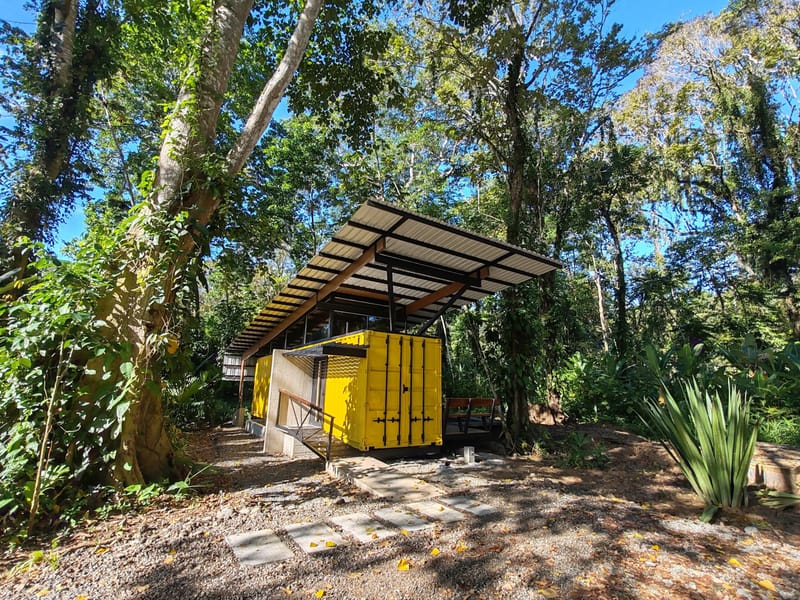
- Kapetsowa Container Loft, Monteverde, for up to four, steps from the Reserve visitor center (about 170 m). The listing says the loft is not suitable for infants or children. Exterior cameras cover the entrance, ramp and parking, and you arm an alarm when you leave. From $128 a night.
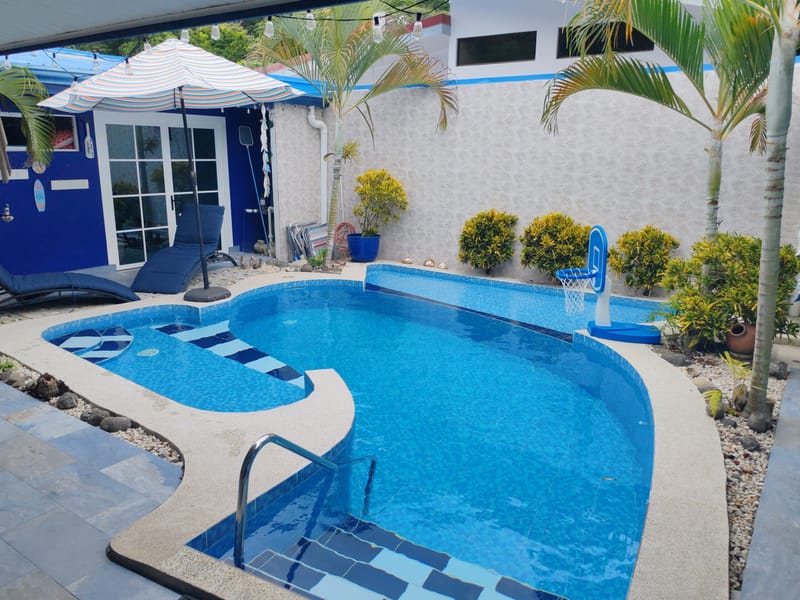
- Casa Azul, Punta Leona, for up to eight, about 1.5 hours from SJO without traffic, closer to 2 with it. One camera covers the garage and the street; the private pool is not fenced, so watch small children. From $287 a night.
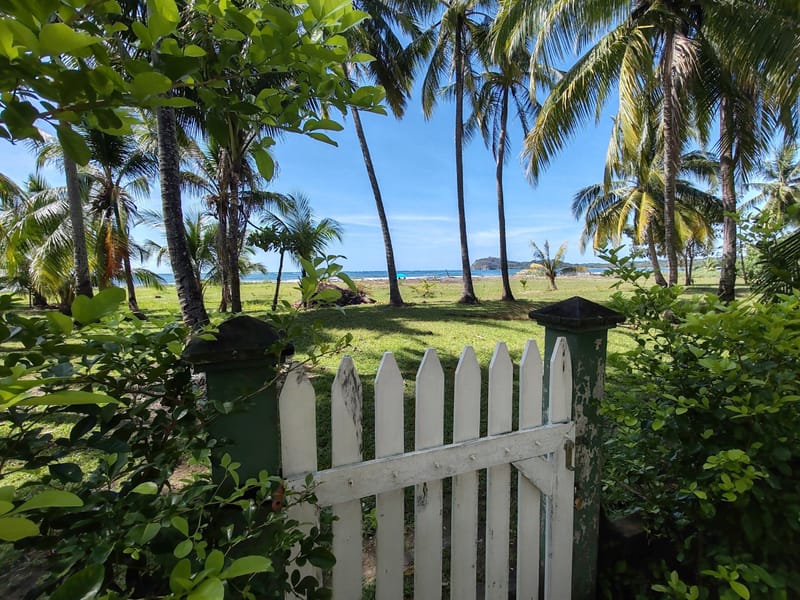
- Casa Almendros, Sámara, beachfront for up to six. A safe in the house, exterior cameras, and a fenced garden with a gate to the sand to keep an eye on. From $303 a night.
- Ewa Boxes, Cahuita, for up to eight. Free parking inside the gate, with cameras at the gate and parking. From $361 a night.
Send us your plans on WhatsApp and we will tell you what to expect where you are going.
Questions this guide answers
What is the US travel advisory level for Costa Rica?
Level 2, Exercise Increased Caution, due to crime, on a scale of four. The State Department issued the current advisory on 2 April 2026 and it is unchanged as of November 2026. Canada uses its own second level, exercise a high degree of caution, in advice updated 13 November 2026.
Can you drink the tap water in Costa Rica?
In most of the country, yes. The tourism board's FAQ says the water is potable in most of Costa Rica and suggests bottled water only in a few rural areas. AyA's National Water Laboratory reported that 89.5% of the population received safely managed drinking water in 2022.
Do US travelers need vaccines for Costa Rica?
None are required to enter from the United States. The yellow fever certificate applies only to travelers arriving from countries with yellow fever risk. CDC recommends routine vaccines plus hepatitis A and B for unvaccinated travelers, and chikungunya vaccine for anyone visiting the outbreak area in the northwest.
What number do you call in an emergency in Costa Rica?
Call 911 for police, ambulance or fire. Since September 2025 a tourism police dispatch is connected directly to 911 to help foreign visitors. To report a theft, file a denuncia at the nearest OIJ office, and call your bank at once about stolen cards.
Sources
- US State Department, travel advisory data feed: Costa Rica, Level 2, Exercise Increased Caution (published 2 April 2026 UTC, read 16 November 2026)
- The Tico Times, U.S. State Department keeps Costa Rica travel warning (10 April 2026)
- Government of Canada, Travel advice for Costa Rica (last updated 13 November 2026)
- Two Weeks in Costa Rica, First-time visit tips (updated 23 September 2026)
- Visit Costa Rica (ICT), FAQs (tap water, beach safety, yellow fever certificate)
- Visit Costa Rica (ICT), Important numbers (9-1-1)
- El Observador, OIJ advice on theft in tourist areas and where to file a report (12 April 2025)
- El Observador, OIJ on fake taxis and rental scams aimed at tourists (24 May 2024)
- El Observador, what the beach flags mean, per a Cruz Roja lifeguard (3 April 2026)
- Delfino.cr, Caribbean Guard and Cruz Roja drowning data (10 April 2025)
- AyA National Water Laboratory, water coverage in Costa Rica to 2022 (Tecnología en Marcha, December 2024)
- CDC, Costa Rica traveler view (vaccines, malaria, yellow fever; reviewed 18 September 2026)
- CDC, Level 2 travel notice: Chikungunya in Costa Rica (30 July 2026)
- ICT via PDCC, ICT equips the tourism police: 320 officers in 21 destinations (17 February 2026)
- Delfino.cr, Tourism police 9-1-1 dispatch opens (2 September 2025)
- Teletica, how to report a crime to the OIJ confidentially, line 800-8000-645 (28 June 2026)