The easiest sloths to find near our homes are on the coastal trail of Cahuita National Park, where both of Costa Rica’s species live, and on a guided night walk in Monteverde, where the two-toed sloth comes out after dark. Carara National Park, near Punta Leona, lists the three-toed. Sámara is the long shot. Look, and never touch.
Which sloths live in Costa Rica, and how do you tell them apart?
Two species, and both are national symbols. Ley 10007, signed on 24 August 2021, names Hoffmann’s two-toed sloth (Choloepus hoffmanni) and the brown-throated three-toed sloth (Bradypus variegatus) symbols of Costa Rica’s wildlife. It also tells the public works ministry to build aerial wildlife crossings on national roads and the power companies to cut electrocutions on their lines.
Three clues tell them apart:
- Front claws. The name counts the front limbs. Animal Diversity Web, the University of Michigan’s species database, says the two-toed has two claws on each forelimb and the three-toed has three. Both have three toes on the back feet.
- Face and coat. The three-toed has a pale face mask with distinctive dark markings; the two-toed has a lighter, yellowish-white head and a coat from dark brown to pale yellow, per a Toucan Rescue Ranch piece in The Tico Times.
- Size and hours. The same piece puts the two-toed at 4.5 to 9 kg and the three-toed at 3.5 to 5.2 kg. Animal Diversity Web calls the two-toed nocturnal, active from about an hour after sunset, and the three-toed active by day and by night.
Where are sloths easiest to see on the Caribbean coast?
In Cahuita National Park. The ICT’s park sheet lists two-toed and three-toed sloths alongside howler, white-faced and spider monkeys. Two Weeks in Costa Rica (updated July 2025) says the stretch between the Suárez river and Punta Cahuita has always been the best for wildlife; on its last visit it found a two-toed sloth asleep near the picnic tables, and on an earlier one a three-toed climbing down a tree. Guides wait outside the entrance in town and charge $40 to $75 per person for a half day, per the same site, which recommends an ICT-certified naturalist. Fees, hours and the river crossing are in our Cahuita National Park guide.
Two rescue centers on this coast show sloths up close without letting you handle them:
- Sloth Sanctuary of Costa Rica, north of Cahuita on Route 36, the road to Limón, working since 1992. As of November 2026, its one-hour Buttercup tour starts on the hour from 8:00 to 15:00 (last tour at 14:00 on Sundays and Mondays), at $30 per adult and $15 for children 5 to 12, with no booking needed. Its site says only staff may handle the sloths, under MINAE rules.
- Jaguar Rescue Center, on the main road from Puerto Viejo to Manzanillo. As of November 2026, guided tours of 1.5 hours start at 9:30 and 11:30 and cost $29, free under 10. Its FAQ says there is no contact with the animals because it is against Costa Rican law, and that you may photograph the animals but not yourself touching one.
Can you see sloths in Monteverde?
Yes, mostly the two-toed, and mostly at night. The Monteverde Cloud Forest Reserve’s own wildlife page lists the two-toed sloth and does not mention the three-toed. Because the two-toed is nocturnal, a night walk is your best chance: Two Weeks in Costa Rica (updated August 2025) found one creeping through the canopy on a walk at the Monteverde Wildlife Refuge that set out around 18:00.
As of November 2026, Kinkajou Night Walk leaves at 18:00 and 20:20, lasts about 1.5 hours and costs $35 per adult and $23 per child on its own site; its page promises nocturnal species in general, not sloths. The reserve runs its own night walk of about 2.5 hours, starting between 18:00 and 18:30, for at most 10 people. For the reserve’s day trails, tickets and timed slots, read Monteverde Cloud Forest Reserve; the Monteverde area guide compares the night tours.
Where do you look on the central Pacific, near Punta Leona?
In Carara National Park, by the Tárcoles river north of Punta Leona. The ICT’s 2024 Central Pacific guide counts about 112 mammal species in the park, 47.8% of the country’s total, and names the three-toed sloth among the most representative, with howler monkeys, pacas and armadillos. Foreign adults pay $10 plus tax, and the guide sends you to sinac.go.cr for information and reservations.
A sloth high in the canopy is hard to pick out without optics, so a guide pays off. Costa Rica Waterfall Tours, sold through Tour Desk, lists a 3-hour guided walk from Jacó at $55 per person with the park fee included and transport for $25 more; its guide carries a telescope and binoculars (checked November 2026). Opening hours and the scarlet macaws are on the Punta Leona area page.
Are there sloths around Sámara?
Maybe, but we cannot confirm it, so treat Sámara as the long shot. The walk most people take is Samara Trails in the Werner Sauter Biological Reserve, a 2.5-hour guided hike at 6:30 or 14:30 for $52 per adult and $32 per child on its own site as of November 2026. Neither that page nor Two Weeks in Costa Rica’s listing for the same hike ($46 per adult plus 13% tax in 2026) names sloths: the animals listed are howler monkeys, coatis, porcupines, owls and birds. One reseller, Lokalee, sells a 3-hour sloth hike in Sámara’s tropical dry forest and says only that you may have the chance to spot one. The rest of Sámara is in its area guide.
When is the best time of day to spot a sloth?
It depends on the species. Animal Diversity Web says the three-toed sleeps 14 to 16 hours a day and is most active between 12:00 and 18:00, so a midday or afternoon walk in Cahuita or Carara can catch one moving. The two-toed starts about an hour after sunset, so it is the one you look for on a night walk.
Look for a dark ball in the fork of a tree, not a whole animal. The three-toed feeds mainly on Cecropia trees, per the same database, so scan those crowns. Both species climb down only to defecate, the three-toed once every 3 to 8 days and the two-toed about once a week. That is when a sloth is most exposed, so if you see one on the ground, step back and let it finish. Bring binoculars, or book a guide with a scope.
Why should you never hold, feed or take a selfie with a sloth?
Because it stresses the animal, and feeding or keeping one breaks Costa Rican law. MINAE, with the ICT, launched the Stop Animal Selfies campaign in October 2019; its red code lists touching, holding or hugging a wild animal as unacceptable, and it cited a 2017 World Animal Protection study that ranked Costa Rica seventh in the world for inappropriate wildlife selfies.
Feeding is an offense. Under article 116 of the Wildlife Conservation Law, giving food to wild animals without SINAC’s authorization carries a fine of 15% to 30% of a base salary, as Delfino reported in August 2026, when the Constitutional Court upheld a SINAC order against feeding. Keeping a wild animal, or catching, selling or giving one away, is a crime, and MINAE asks you to report it on 1192 (Delfino, November 2025).
In practice: walk past anyone who offers you a sloth to hold for a photo, keep your distance on the trail, and choose centers that put no-contact rules in writing, as the Sloth Sanctuary and the Jaguar Rescue Center do.
Where to stay near the sloths: our homes
These homes are ours. None of the listings promises sloths at the door, so plan on the parks above.
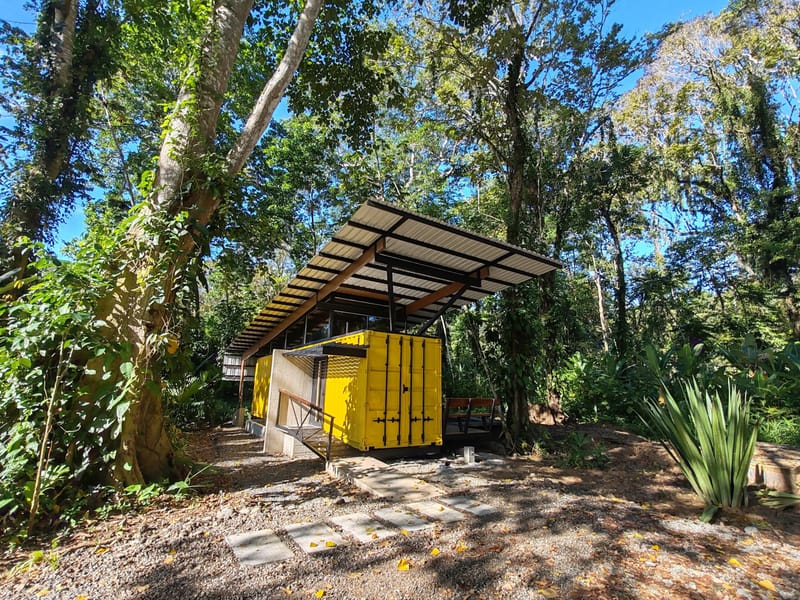
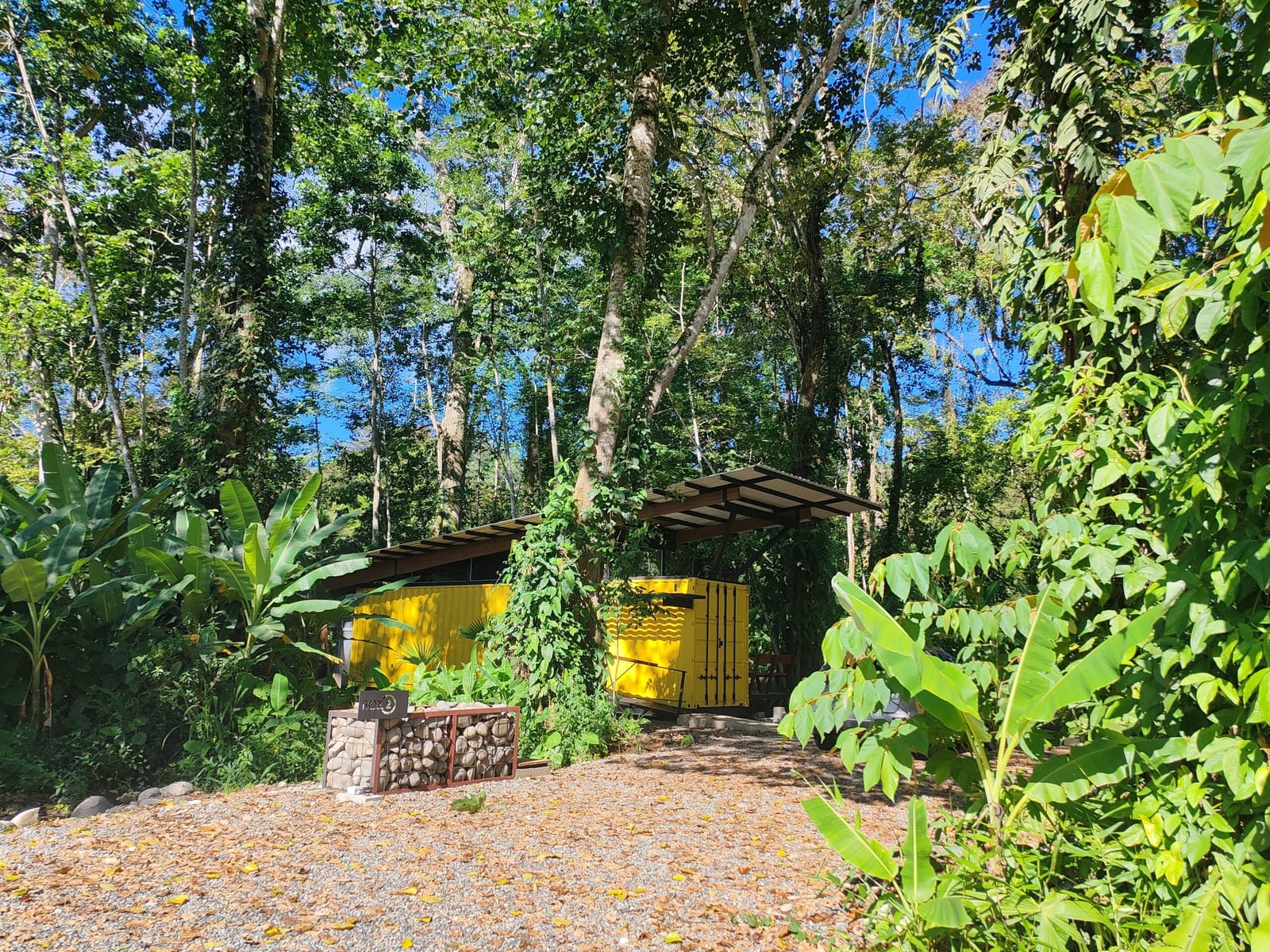
- Ewa Boxes, Cahuita. Two container villas on one jungle plot for up to 8, with a plunge pool to yourselves, from $361 a night. Cahuita National Park is a short drive, and the listing says you may meet monkeys, frogs and butterflies on the paths.
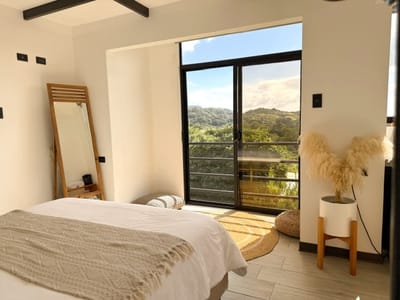
- Kapetsowa Container Loft, Monteverde. A glass-walled loft for up to 4, steps from the Reserve visitor center (about 170 m), from $128 a night.
- Calma Loft, Monteverde. A one-room container loft for up to 3, 15 minutes by car from Santa Elena; a guest timed the Kinkajou Night Walk at about 15 minutes away. From $103 a night.
- Casa Yaiwa, Santa Elena. Three bedrooms for up to 6, two minutes on foot from town, where the night walk pickups run. From $107 a night.
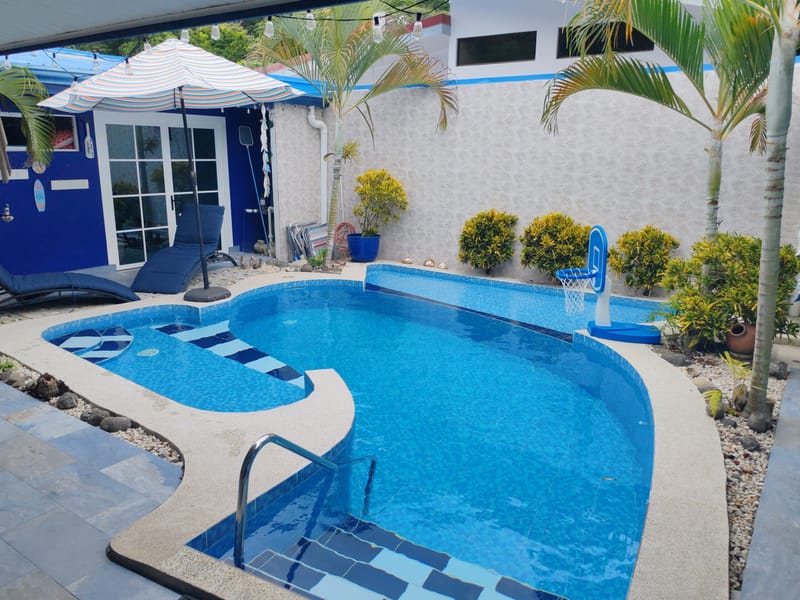
- Casa Azul, Punta Leona. A single-story family house for up to 8 with a private pool, from $287 a night. Natural Leona and Lapas Paradise, next door to each other, sleep 8 each and share a saltwater pool, or book both as Lapas Leona Home. Punta Leona is about 1.5 hours from SJO without traffic, closer to 2 with it.
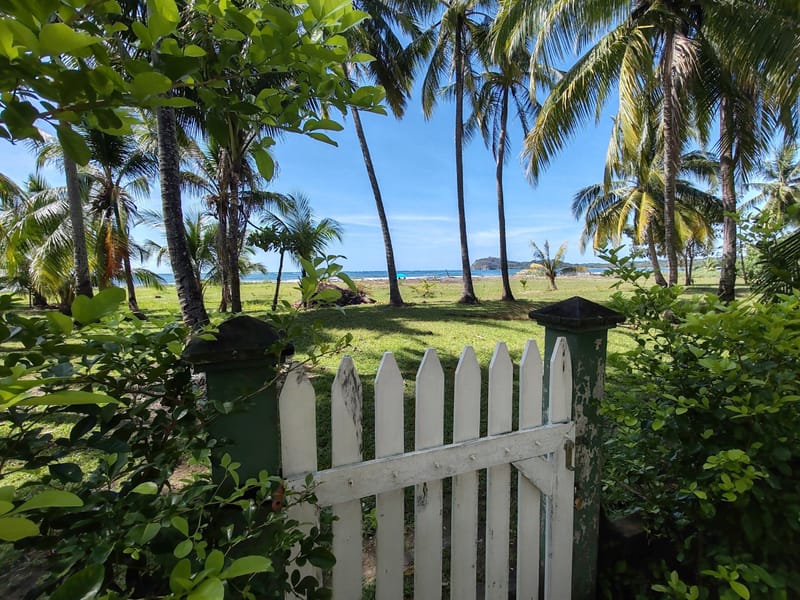
- Casa Almendros, Sámara. A beachfront house for up to 6 with a garden gate to the sand, two-night minimum, from $303 a night.
At all three Monteverde homes we help you book a night walk; send us your dates on WhatsApp.
Questions this guide answers
What is the difference between a two-toed and a three-toed sloth?
Count the front claws: two on the two-toed, three on the three-toed, and both have three on the back feet, per Animal Diversity Web. The three-toed has a pale face mask with dark markings and is active by day and night; the two-toed has a lighter head and comes out about an hour after sunset.
Where is the best place to see sloths near your homes?
Cahuita National Park, near our Ewa Boxes. The ICT lists both species there, and Two Weeks in Costa Rica found a two-toed sloth asleep near the picnic tables and a three-toed coming down a tree, between the Suárez river and Punta Cahuita. In Monteverde, book a night walk for the two-toed.
Can you hold or take a photo with a sloth in Costa Rica?
No. MINAE's Stop Animal Selfies campaign lists touching, holding or hugging a wild animal as unacceptable. The Sloth Sanctuary says only its staff may handle sloths under MINAE rules, and the Jaguar Rescue Center says contact is against Costa Rican law. You can photograph the animals, just not yourself holding one.
How much does a guided walk to see sloths cost?
As of November 2026, Kinkajou Night Walk in Monteverde charges $35 per adult and $23 per child, a 3-hour Carara walk sold through Tour Desk is $55 with the park fee, and Two Weeks in Costa Rica puts half-day Cahuita guides at $40 to $75. The Sloth Sanctuary's one-hour tour costs $30 per adult.
Sources
- Animal Diversity Web (University of Michigan), Bradypus variegatus: claws, activity hours, Cecropia diet, descents every 3 to 8 days (checked 16 November 2026)
- Animal Diversity Web (University of Michigan), Choloepus hoffmanni: two front claws, nocturnal, weekly descent (checked 16 November 2026)
- The Tico Times with Toucan Rescue Ranch, spot the difference: two-toed vs three-toed sloths (July 2020)
- Bufete de Costa Rica, Ley 10007: both sloths declared national symbols (La Gaceta 176, 14 September 2021)
- EFE via Swissinfo, the sloth becomes a national symbol of Costa Rica (24 August 2021)
- ICT, Visit Costa Rica park sheet: Cahuita National Park (two- and three-toed sloths)
- Two Weeks in Costa Rica, Cahuita National Park (updated July 2025: sloth sightings, guide prices)
- Sloth Sanctuary of Costa Rica, home page (location, since 1992, handling by staff only; checked 16 November 2026)
- Sloth Sanctuary of Costa Rica, tours (prices, times, no touching; checked 16 November 2026)
- Jaguar Rescue Center, public tour (price, times, no contact, photos; checked 16 November 2026)
- Monteverde Cloud Forest Biological Preserve, wildlife of the cloud forest (two-toed sloth; checked 16 November 2026)
- Monteverde Cloud Forest Biological Preserve, visit the preserve (night walk; checked 16 November 2026)
- Kinkajou Night Walk (times, prices; checked 16 November 2026)
- Two Weeks in Costa Rica, night walk in Monteverde (updated August 2025)
- ICT, Central Pacific tourist guide 2024: Carara National Park (mammals, three-toed sloth, fees)
- Tour Desk, Carara National Park Tour by Costa Rica Waterfall Tours (price, guide equipment; checked 16 November 2026)
- Samara Trails, Werner Sauter Biological Reserve guided hike (prices, times; checked 16 November 2026)
- Two Weeks in Costa Rica, Samara Trails guided hike (2026 prices, animals seen)
- Lokalee, Samara Sloth Hiking and Butterfly Garden (checked 16 November 2026)
- El Observador, MINAE and ICT launch #StopAnimalSelfie (25 October 2019)
- Delfino, Constitutional Court upholds SINAC ban on feeding wild ducks (article 116 fine; 6 August 2026)
- Delfino, MINAE reminds that keeping or gifting wild animals is a crime (1192; 7 November 2025)